

Minimalist Aesthetic Clothing for Everyday Wear: 7 Outfit Ideas
Table of Contents
- What Minimalist Aesthetic Clothing Actually Means for Everyday Wear
- Minimalist Wardrobe Essentials You'll Actually Wear
- The 3-3-3 Outfit Rule, Explained Simply
- How to Build a Minimalist Capsule Wardrobe
- Minimalist Outfit Ideas for Work, Weekends, and Everything Between
- Fit, Proportion, and Inclusive Sizing in a Minimalist Wardrobe
- Care, Repair, and Making Minimalist Pieces Last
- How to Keep Minimalist Outfits Feeling Personal
- Frequently Asked Questions
Last Updated: October 19, 2026
What Minimalist Aesthetic Clothing Actually Means for Everyday Wear
Minimalist aesthetic clothing is a style built on clean lines, neutral colors, and simple silhouettes that work together without effort. This guide from Need It Creations breaks down how to wear it daily, with outfit ideas, a capsule wardrobe plan, and honest budget math.
Most guides get one thing wrong. They treat minimalism as a look, when it is really a system. The look follows once the system works.
Minimalist Wardrobe Essentials You'll Actually Wear
Start with pieces that mix and match without thinking. A minimalist wardrobe essentials list usually runs short: a plain white or neutral tee, a well-cut trouser, dark denim, a relaxed button-down, a knit layer, and one pair of shoes you can walk in all day.
The Core Pieces Worth Owning
- Plain crewneck tees in white, black, and one neutral tone
- Straight-leg or relaxed trousers in a solid color
- Dark wash denim with no distressing
Our GenXen classic tee ($24.99) fits this list directly: ring-spun cotton, a clean crew neck, and no side seams for a smoother drape. Neutral, versatile, and easy to layer.

The 3-3-3 Outfit Rule, Explained Simply
The 3-3-3 outfit rule is a styling shortcut: three tops, three bottoms, and three pairs of shoes that all coordinate, giving you 27 outfit combinations from nine items. It is the fastest way to test whether a minimalist aesthetic wardrobe actually works before you commit to a full capsule.
The rule forces a real check. If a top only works with one bottom, it does not belong in the set. Swap it for something that plays well with everything else.
How to Build a Minimalist Capsule Wardrobe
A minimalist capsule wardrobe is a small, coordinated set of clothes you rotate for a season. Build it in four steps:
- Clear out anything unworn in the last year
- Pick one neutral color palette and stick to it
- Fill gaps with versatile pieces, not duplicates
- Add one or two pieces that carry personality
Cost Per Wear: The Math That Keeps You Honest
Cost per wear equals the price divided by the number of times you wear it. A $60 knit worn 60 times costs $1 per wear. A $25 top worn twice costs $12.50 per wear and was the worse buy. Run this math before every purchase and the budget-friendly choice becomes obvious.
| Item | Price | Wears Per Year | Cost Per Wear |
|---|---|---|---|
| Neutral tee | $24.99 | 50 | $0.50 |
| Statement top | $25 | 4 | $6.25 |
| Everyday cap | $30.99 | 80 | $0.39 |
Minimalist Outfit Ideas for Work, Weekends, and Everything Between
Most minimalist outfit lists stop at a photo and a caption. Everyday wear is messier than that: you commute, sit at a desk, run errands in the rain, and move between a heated office and a cold street. The guide below organizes outfits by the day you are actually having, so you can build from the shoe up and stop guessing at 7 a.m.
Start With the Day, Not the Outfit
Before you pick a top, answer three questions in this order:
- What is the dress code? Business casual, casual, or no dress code at all.
- What is the activity? Sitting, walking, standing, or a mix.
- What is the weather range? The low you will feel in the morning and the high you will feel at 3 p.m.
The answers set your shoe, your layer, and your fabric weight. The color palette stays neutral either way, which is what keeps the outfit minimal.
Commute and Casual Office
A casual office is the hardest dress code because it sits between jeans and a blazer. Keep the palette to two neutrals and let fit carry the formality.
- Top: fine-knit sweater or a clean crewneck tee under an unstructured button-down
- Bottom: straight-leg trouser in a solid neutral, or dark-wash denim with no distressing
- Shoe: low-profile leather sneaker or a simple loafer
If your office runs cold, add a thin merino layer rather than a bulky sweater. Merino regulates temperature better than cotton and packs down small, so it works on the commute and at the desk.
Errands and Weekend
The goal here is movement. Pick the shoe first and build upward, because the wrong shoe ruins an otherwise simple outfit.
- Top: relaxed tee or a lightweight knit
- Bottom: straight-leg jeans or a relaxed trouser with a little stretch
- Shoe: clean sneaker or a walking shoe in a neutral tone
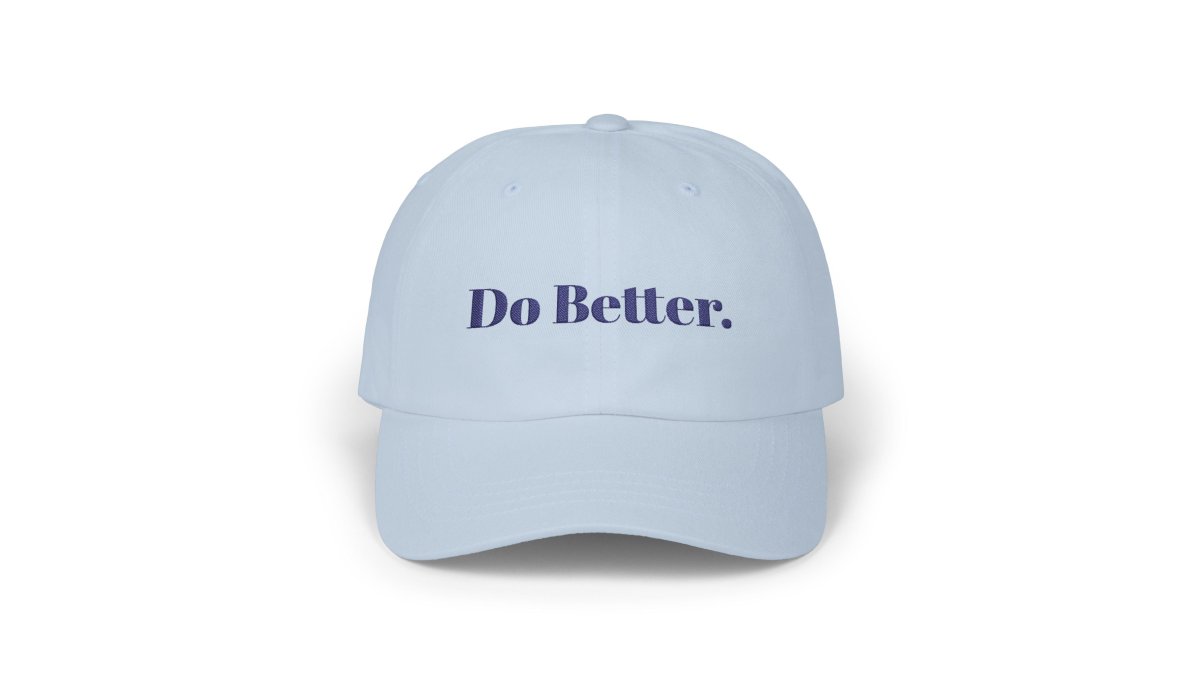
Our Do Better. baseball hat ($30.99) fits this slot: unstructured, low-profile, and adjustable, with a subtle embroidered message that adds character without shouting.

Changing Weather: Layering That Actually Works
The mistake most people make is dressing for the morning temperature and suffering by lunch. Build a three-layer system instead:
- Base: a tee or thin knit that works alone indoors
- Mid: a cardigan, overshirt, or fine-knit sweater you can remove
- Outer: a coat or jacket that blocks wind and rain
In cold weather, the mid layer does the work and the outer layer handles the elements. In warm weather, drop the outer layer and switch to breathable cotton or linen. A common pattern is to keep one neutral outer layer per season rather than three statement coats you wear twice.
Dress Code Cheat Sheet
| Setting | Top | Bottom | Shoe |
|---|---|---|---|
| Business casual | Button-down or fine knit | Tailored trouser | Loafer or flat |
| Casual office | Tee under overshirt | Dark denim or straight trouser | Leather sneaker |
| Errands | Relaxed tee | Straight-leg jeans | Walking sneaker |
| Evening casual | Knit sweater | Straight trouser | Clean sneaker or boot |
Fit, Proportion, and Inclusive Sizing in a Minimalist Wardrobe
Fit matters more in minimalism than anywhere else. With no pattern or print to distract, silhouette and proportion do all the work. A tee that sits right at the shoulder and hits mid-hip looks intentional. The same tee two sizes off looks careless. The good news is that fit is a set of rules you can learn, not a talent you are born with.
The Three Fit Checkpoints
Every minimalist piece should pass three checks before it earns a place in your wardrobe:
- Shoulder seam: it should sit at the edge of your shoulder bone, not past it and not inside it. This is the single most important measurement on a tee, knit, or jacket.
- Hem length: a tee should hit mid-hip; a knit should hit the top of the hip bone; a trouser should break once at the shoe.
- Ease: you should be able to pinch about an inch of fabric at the chest and a half inch at the waist. More than that reads as oversized; less reads as tight.
If a piece fails one checkpoint, it will fail in the mirror every time you wear it. Return it rather than talk yourself into it.
Proportion Rules That Work Across Body Shapes
The goal of proportion in minimalism is balance, not correction. Two rules cover most situations:
- Balance volume with structure. A looser top pairs with a straighter bottom, and a fitted top pairs with a wider leg. Keep one element fitted so the outfit has a shape.
- Create a visual waist. Tuck, belt, or choose a higher rise. This works on every body shape because it gives the eye a midpoint.
For shorter frames, a higher rise and a hem that hits at the ankle lengthen the leg line. For taller frames, a mid-rise and a full-length trouser keep the proportion from looking stretched. For curvier shapes, a straight-leg or wide-leg trouser in a fabric with some weight drapes cleanly without clinging.
Inclusive Sizing: What to Check Before You Buy
Inclusive sizing is not a bonus feature, it is the baseline. Our Fiercely Independent tshirt ($22.99) runs from XS through 5XL in a regular fit, so the same clean silhouette is available across body shapes. But size range alone is not enough. Check these three things before ordering:
- The size chart, not the size label. Measure a tee you already own flat across the chest and compare it to the chart. That number beats guessing every time.
- The fit description. Regular, relaxed, and oversized are different cuts, not different sizes. Pick the cut you want first, then the size.
- The return policy. Order two sizes when you are between sizes and return the one that fails the checkpoints.
Adapting Minimalist Silhouettes
A few adjustments make the same minimalist pieces work across body types and preferences:
- Shorten hems. A tailor can take up a tee or trouser hem for a small fee, and it changes the whole line of the outfit.
- Take in the waist. A straight trouser that fits the hip but gaps at the waist can be taken in rather than replaced.
- Choose fabric with weight. Thin, clingy fabric shows every line; a mid-weight cotton or a ponte knit drapes cleanly and holds its shape.
Care, Repair, and Making Minimalist Pieces Last
Longevity is what makes minimalism pay off. A small wardrobe only works if the pieces survive. Wash cold, inside out, with similar colors. Air-dry knits flat so they keep their shape (How to dry a wool sweater).
Repair before you replace. Reattach a loose button, darn a small hole, and re-stitch a hem. Most fixes take ten minutes and extend a garment's life by years.
How to Keep Minimalist Outfits Feeling Personal
Minimalist outfits go flat when everything is beige and identical. Personality comes from small, deliberate choices: one piece with a message, a single texture contrast, or a signature accessory you repeat on purpose.
This is where a plain wardrobe earns its keep. Our I'm Just Looking Tee ($24.99) is a clean neutral-color tee with a quiet, witty front print, so it reads minimal at a glance and personal up close.

Pick one or two of these and wear them on repeat. Repetition is not a flaw in minimalism. It is the signature.
Frequently Asked Questions
What is the 3-3-3 rule for outfits?
The 3-3-3 outfit rule is a styling shortcut: pick three colors, three pieces, and three accessories or textures for a single look. It keeps an outfit from feeling flat without letting it get busy. For example, a white tee, navy trousers, and tan sneakers hit three colors; add a cap, a tote, and a simple necklace and you have your three accessories. The rule works especially well with minimalist aesthetic clothing because it forces you to build around a small, cohesive set of pieces instead of piling on trends.
What are the essential pieces in a minimalist wardrobe?
Start with plain tees in neutral colors, a couple of button-downs, straight-leg or relaxed trousers, dark denim, a knit layer, a simple jacket, and one pair of clean sneakers plus one dressier shoe. Add a low-profile cap and a tote for daily carry. The goal is not a specific number but coverage: every piece should work with at least three others. A soft ring-spun cotton tee, for instance, layers under a jacket, tucks into trousers, or wears alone on warm days, which is exactly the versatility a capsule depends on.
How do you create a minimalist outfit for everyday wear?
Pick one anchor piece, then build outward with two or three items in the same color family. A plain tee plus straight trousers plus a cap takes about thirty seconds and reads intentional. Keep silhouettes simple, skip loud logos, and let fit and fabric do the work. If the outfit feels flat, change one texture (a ribbed knit instead of a smooth tee) rather than adding a new color. That single-swap habit is the fastest way to make minimalist aesthetic clothing feel like a real wardrobe rather than a uniform.
Can minimalist clothing be comfortable and casual?
Yes, and it usually is. Minimalist clothing leans on soft fabrics and simple construction rather than structured, fussy details. Look for ring-spun cotton tees, relaxed trousers, and low-profile hats with adjustable straps. Check the care label too: cold machine wash, low tumble dry, and no bleach keep soft cotton feeling soft for years. Comfortable pieces get worn more often, and worn-often pieces are what make a small wardrobe actually work.
How can you make minimalist outfits look interesting?
Use texture, proportion, and one personal detail instead of pattern and color. A smooth cotton tee under a chunky knit, a slightly cropped top with a high-waisted trouser, or a plain outfit finished with a hat that has a small embroidered message all add interest without clutter. Personal touches matter most: a graphic that means something to you reads as style, while a generic logo reads as noise. Rotate two or three signature accessories and your minimalist outfits will stop feeling repetitive.
Building a minimalist wardrobe takes discipline, and finding pieces that feel like you inside those clean lines is the hard part. Need It Creations makes that easier with comfortable everyday apparel that carries personality: ring-spun cotton tees with a clean drape, a low-profile adjustable cap, and designs that stay quiet until someone reads them. Start with one neutral base piece and one that sounds like you, then build from there.